
News
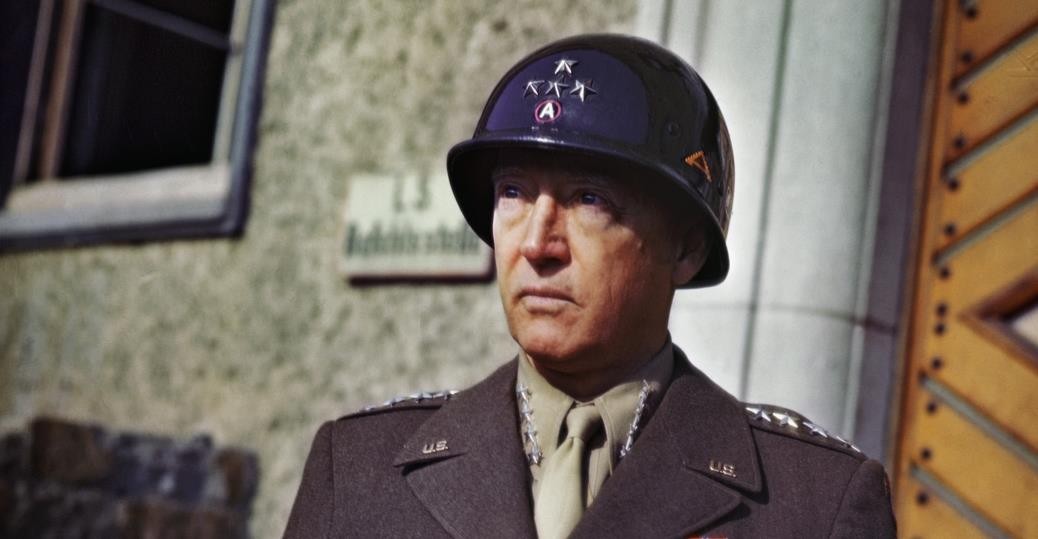
Eighty years ago, General George S. Patton died from his injuries
Eighty years ago, General George S. Patton died from his injuries.
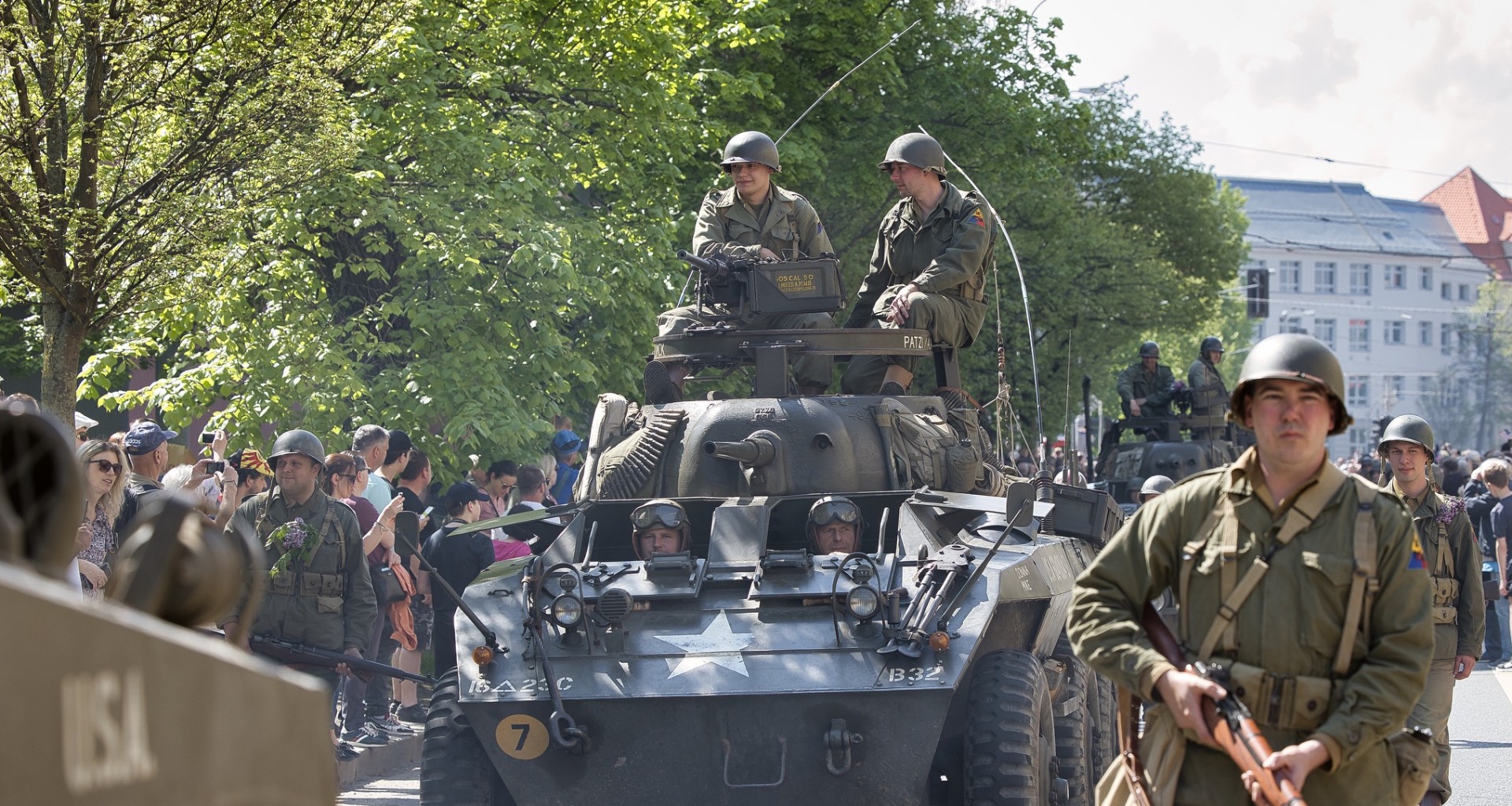
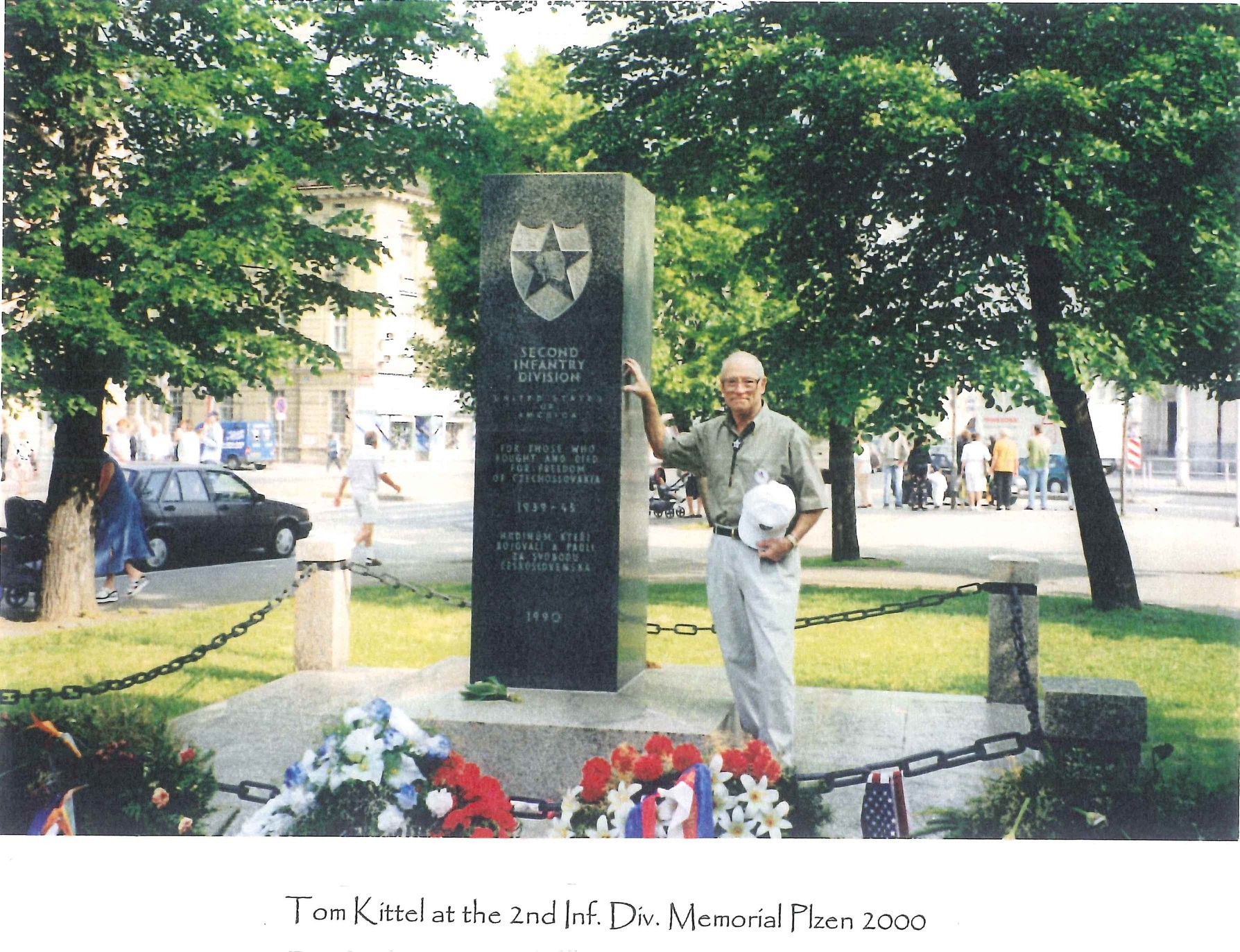
We commemorated his memory by laying flowers at the military cemetery in Hamm, Luxembourg, at the memorial in Bastogne, Belgium, at the monument in Pilsen, and at the statue in front of the General Patton Elementary School and Kindergarten in Dýšina.
General George Smith Patton Jr. was born on November 11, 1885, in San Gabriel, California. His Third US Army, which he commanded during World War II, liberated, among other places, western and southwestern Bohemia, including the cities of Pilsen, Přeštice, Rokycany, Strakonice, Domažlice, and Cheb.
He grew up in a family with a rich military history. His grandfather and great-uncle fought on the Confederate side in the American Civil War. His grandfather, General George Smith Patton, became a general at the age of just 21 and died leading the 22nd Virginia Regiment. His great-uncle, Colonel Waller Patton, died in the Battle of Gettysburg.
As a child, he suffered from dyslexia, but he compensated for it with strict discipline and achieved brilliant success at the prestigious US Military Academy at West Point through his relentless efforts. In his penultimate year, he was appointed cadet commander, even though he had been threatened with expulsion at the end of his first year.
In 1912, he participated in the Olympic Games in Stockholm and finished fifth in the premiere of the modern pentathlon.
He was one of the first advocates of tank warfare. As a participant in World War I on the European continent (he was Chief of Staff to General Pershing), he soon understood the importance of tanks and worked during the interwar period to promote their adoption and incorporation into the US Army's arsenal. In World War II, he held important positions during the American campaigns in North Africa, the invasion of Sicily, and on the Western Front.
He was considered one of the best field commanders of the Western Allies and a brilliant tactician of mobile warfare. He had a reputation as a pure and fierce warrior and was nicknamed Old Blood and Guts, Blood and Mud, or the Tank Destroyer. However, his fiery temper was a major disadvantage. He had several incidents while visiting field hospitals, where he attacked "malingerers," which for him was anyone who did not show injuries. He slapped or scolded soldiers several times who had suffered mental breakdowns or, for example, dysentery. Another negative aspect was his excessive competitiveness (e.g., during the fighting in Sicily, he explicitly instructed his officers to capture Messina before Monty, i.e., British Field Marshal Bernard Law Montgomery, whatever the cost). His outbursts of anger caused him serious problems with his superiors on several occasions. As a result, in Africa and during the invasion of Sicily, his subordinate General Omar Bradley was appointed commander-in-chief of American forces in Europe in 1944 and became his commander for the rest of the war.
Two revolvers were an integral part of his image: a Colt .45 and a Smith & Wesson .357 Magnum, both with ivory grips, which he carried almost constantly at his waist.
Patton's absence from the Normandy landings was presented by the German side as evidence of the leader's conviction that this was only a diversionary tactic and that the main landings had not yet taken place.
He died as a result of a car accident – on December 9, 1945, his staff Cadillac collided with a truck at an intersection on the outskirts of Mannheim. The accident did not look dramatic, and the others escaped unharmed. However, he himself was extremely unlucky; the impact threw him upwards and he hit his head on the roof of the car so badly that he broke two cervical vertebrae and seriously injured his spinal cord. He was completely paralyzed from the neck down and eventually began to have difficulty breathing. He died shortly afterwards in hospital from a pulmonary embolism.
In accordance with his own wishes, he was buried in the American military cemetery in Hamm, Luxembourg, alongside other members of the 3rd Army, which he commanded. This took place on December 23, 1945.
Do you need any advice?
Don't miss important news